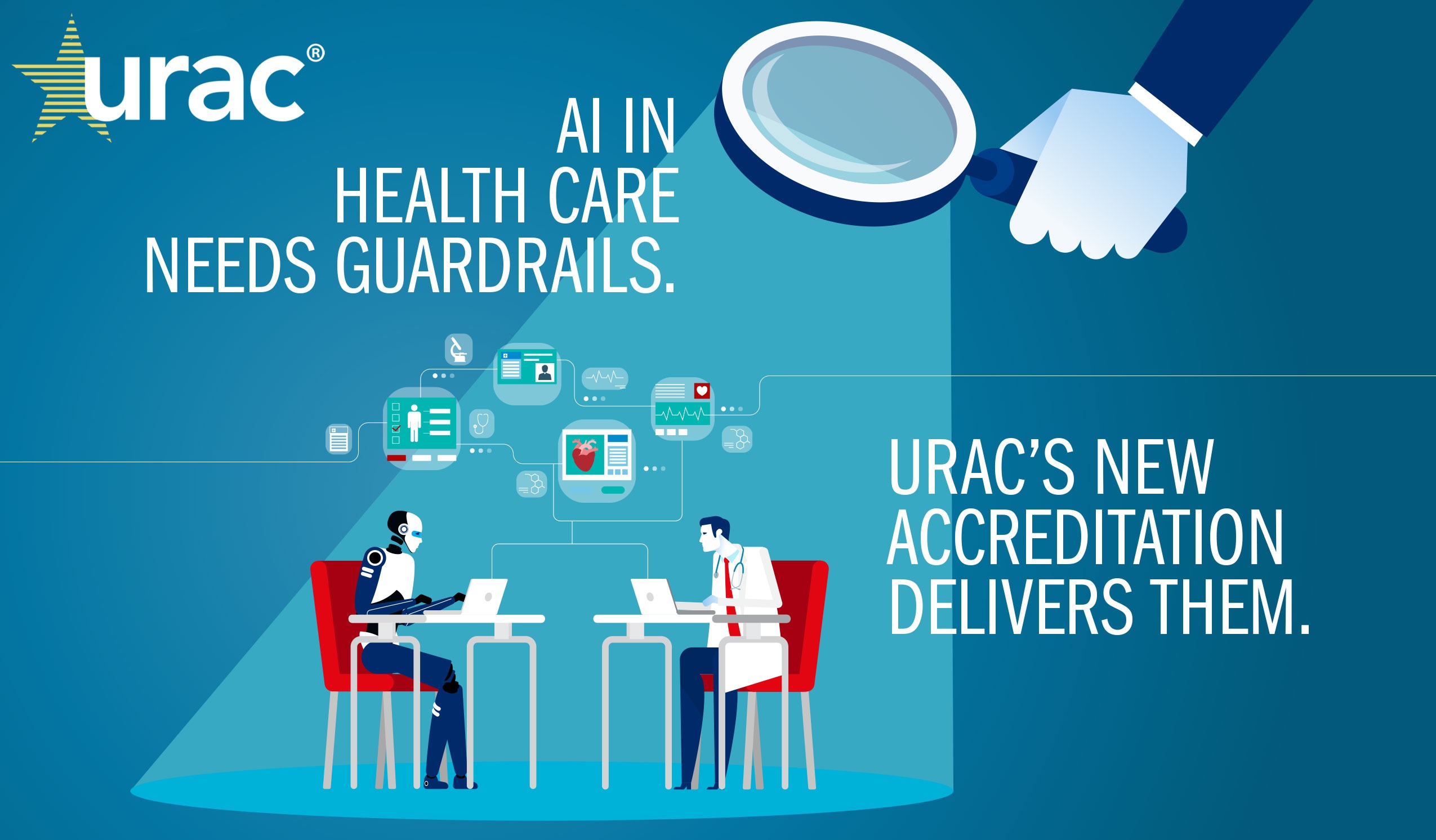

A recent article in Becker’s Hospital Review highlights a growing reality in health care: artificial intelligence governance must be grounded in practical understanding, not uncertainty or hesitation. In the piece, Jennifer Richards, Senior Director, Product Management at URAC, explains that many organizations already possess the core capabilities needed to oversee AI. What’s required is a structured approach that asks the right questions about how models are trained, how data is used and how outputs are monitored over time.
Health systems routinely manage complex clinical, quality and compliance programs. AI governance builds on that foundation. By defining intended use, establishing guardrails and documenting processes for monitoring and corrective action, organizations can integrate AI oversight into existing quality infrastructure. URAC’s Health Care AI Accreditation provides a comprehensive framework to support this work, helping organizations operationalize governance, accountability and transparency across people, process and product.
As AI adoption accelerates, structured governance strengthens trust among clinicians, leadership and patients. Organizations that approach AI with clarity and defined oversight are better positioned to scale innovation responsibly while maintaining quality and accountability.