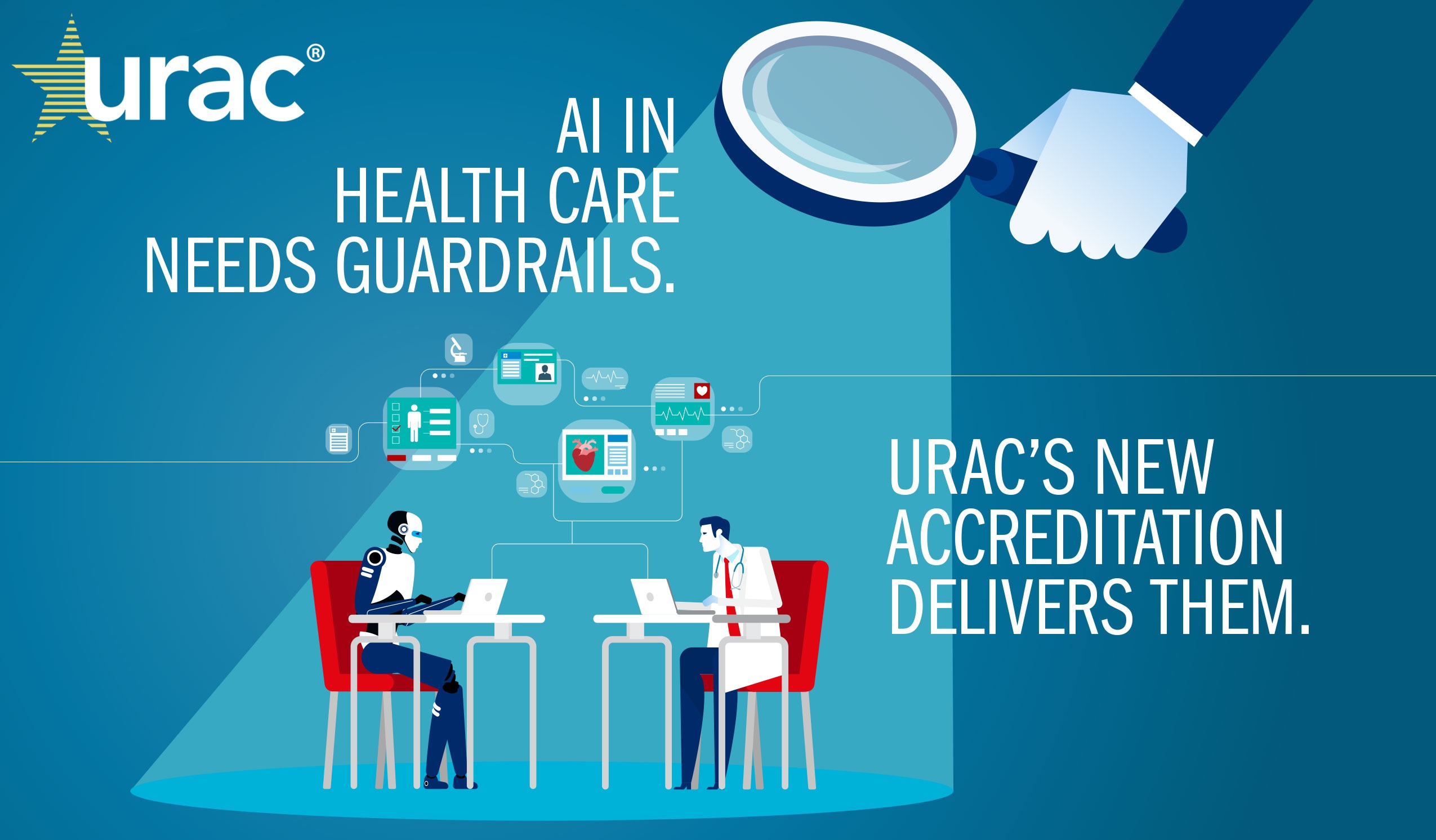

As artificial intelligence tools continue moving into clinical environments, emergency departments are becoming a key example of both the potential benefits and the operational risks associated with AI-enabled care. Recent discussions across health care have highlighted how emergency departments are using AI to support imaging review, clinical documentation, triage prioritization and risk prediction. At the same time, clinicians and health care leaders continue raising important questions around governance, transparency and clinical oversight.
URAC President and CEO Shawn Griffin, MD, recently shared perspective on these issues in a Medscape article that examines the growing role of AI in emergency medicine. He noted that many current AI applications are focused on helping address operational burdens created by earlier generations of health technology implementation. As AI adoption accelerates, organizations are looking for ways to evaluate these technologies and implement governance structures that support quality, accountability and patient trust.
These questions are central to the broader conversation around responsible health care AI. When AI tools are used in emergency medicine, clinical documentation, care management or other health care settings, organizations need clear processes for oversight, risk management, transparency and accountability. URAC’s Health Care AI Accreditation provides an independent framework to help organizations evaluate and strengthen the governance practices needed to use AI responsibly in health care.