
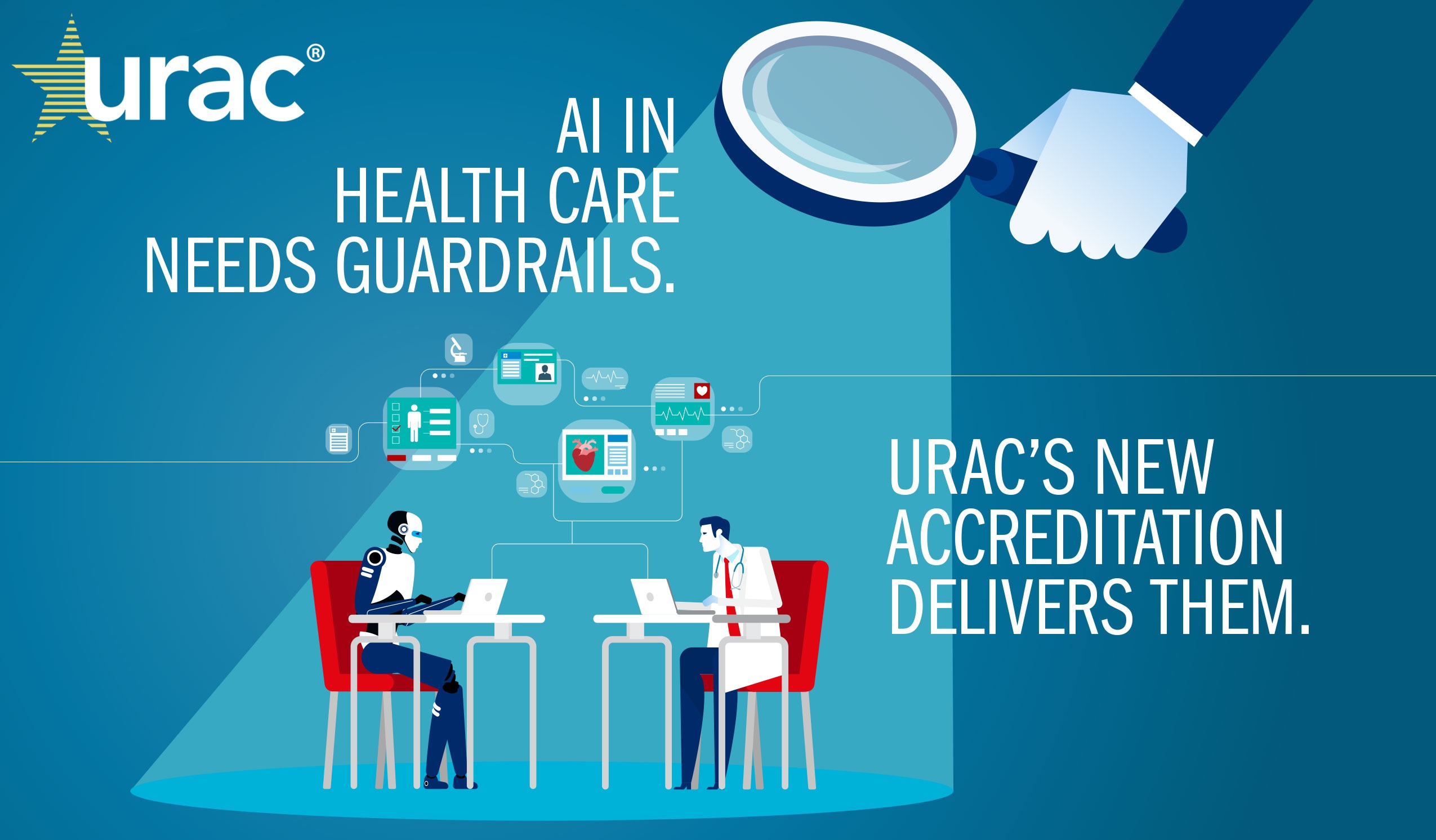
Understanding why regulating AI in health care is essential for ensuring quality, safety, and ethical standards
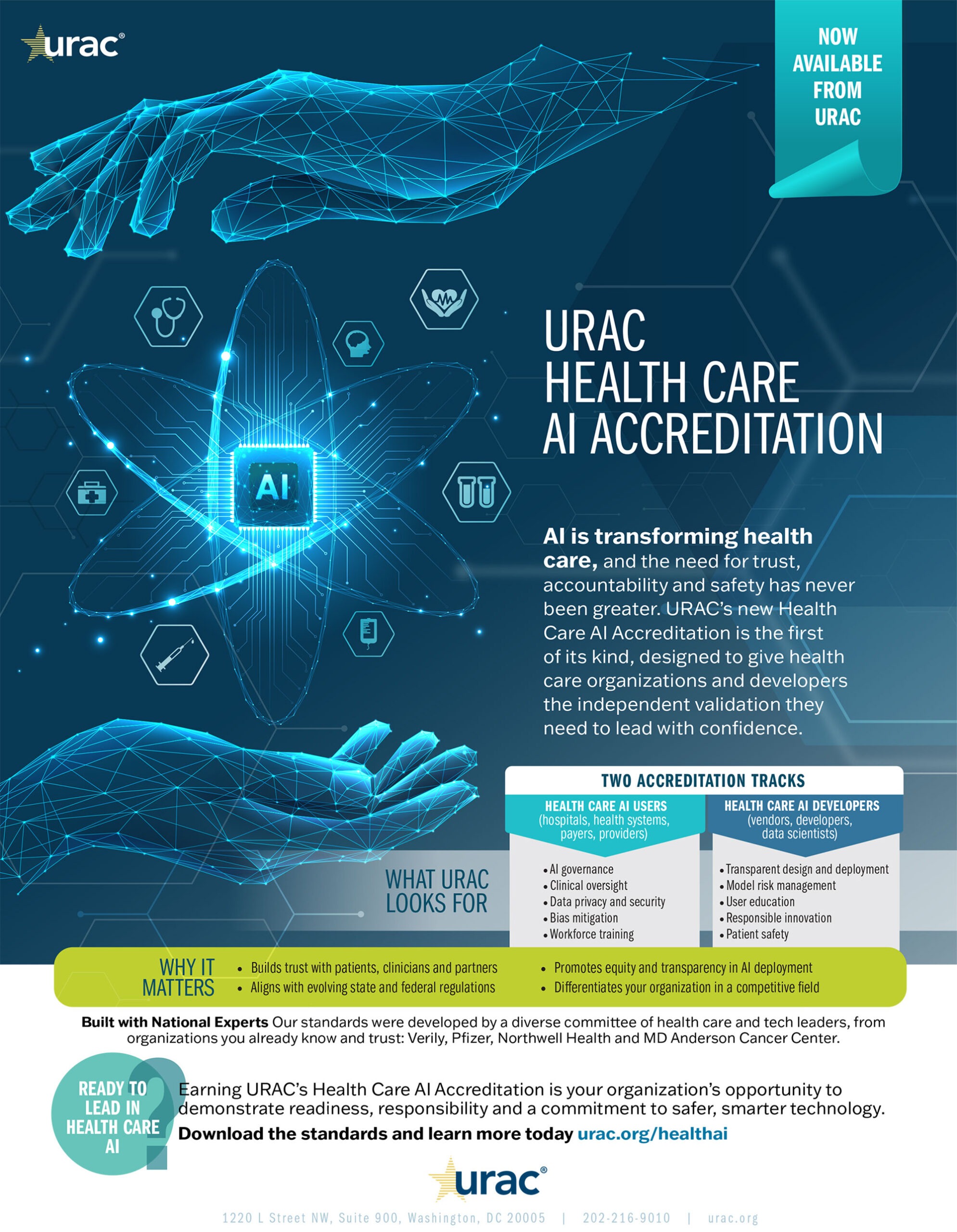
Artificial intelligence is already transforming health care. URAC’s Health Care AI Accreditation gives organizations a trusted framework to show their AI systems are safe, ethical and patient-centered.
- For Users: Health systems, providers and hospitals adopting AI in care delivery. Learn More Here
- For Developers: Technology companies and innovators building AI for health care. Learn More Here
You can demonstrate leadership, earn trust and set the standard for responsible usage of AI in health care.
The Growing Influence of AI in Health Care
Artificial Intelligence (AI) is revolutionizing the health care industry. From predictive analytics to robotic surgery, AI technologies are being integrated at an unprecedented rate. Health care providers are leveraging AI to enhance patient care, streamline operations, and reduce costs. However, with the increasing reliance on AI, it becomes crucial to regulate these technologies to ensure they are used safely and ethically.
AI's growing influence can be seen in various applications, including diagnostics, treatment recommendations, and patient monitoring. For instance, AI algorithms can analyze vast amounts of data to identify patterns and predict patient outcomes more accurately than traditional methods. This capability is particularly beneficial in the early detection of diseases, where timely intervention can significantly improve patient prognosis.
Challenges of Unregulated AI in Health Care
While AI holds immense potential, unregulated AI poses several challenges that can compromise patient safety and care quality. One of the primary concerns is the lack of standardized frameworks for AI deployment. Without consistent regulations, AI systems may vary significantly in terms of accuracy, reliability, and safety.
Another challenge is the potential for bias in AI algorithms. If the data used to train AI models is not representative of diverse patient populations, the resulting predictions and recommendations may be biased. This bias can lead to disparities in care and negatively impact health equity. Additionally, the lack of transparency in AI decision-making processes can make it difficult for health care providers to trust and validate AI recommendations.
Benefits of AI Regulation for Patient Safety
Regulating AI in health care offers multiple benefits, primarily by enhancing patient safety. By establishing standardized frameworks and guidelines, regulators can ensure that AI systems meet specific quality and safety benchmarks. This standardization helps mitigate risks associated with inaccurate or unreliable AI predictions.
Furthermore, regulations can promote transparency and accountability. AI developers would be required to document their algorithms' decision-making processes, making it easier for health care providers to understand and trust AI recommendations. This transparency also facilitates better oversight and monitoring, ensuring that AI systems continue to perform as intended over time.
The Role of Accreditation in Maintaining AI Standards
Accreditation plays a pivotal role in maintaining AI standards in health care. Organizations like URAC offer accreditation programs that set evidence-based standards for AI technologies, ensuring they are safe, ethical, and effective. These programs provide health care organizations with the framework to demonstrate their commitment to quality and safety.
URAC's Artificial Intelligence in Health Care Accreditation is a first-in-nation program that allows health systems, hospitals, and developers to validate their AI technologies. By achieving accreditation, organizations can differentiate their AI solutions in the market, build credibility with payers and regulators, and enhance patient trust.
Case Studies: Successful Implementation of AI Regulation
Several health care organizations have successfully implemented AI regulations with positive outcomes. For example, a hospital system that adopted URAC's AI accreditation program reported improved accuracy in diagnostic imaging. The standardized framework provided by the accreditation ensured that the AI algorithms were rigorously tested and validated, leading to more reliable and accurate results.
Another case study involves a health plan that integrated AI for predictive analytics in patient management. By adhering to regulatory guidelines, the health plan was able to reduce hospital readmissions and improve patient outcomes. The transparency and accountability enforced by the regulations helped build trust among health care providers and patients.
Future Directions for AI Regulation in Health Care
As AI continues to evolve, so too must the regulations governing its use in health care. Future directions for AI regulation should focus on enhancing collaboration between regulators, AI developers, and health care providers. This collaboration can facilitate the development of more comprehensive and adaptive regulatory frameworks that keep pace with technological advancements.
Additionally, regulators should prioritize health equity by ensuring that AI systems are trained on diverse and representative data sets. This approach can help mitigate bias and ensure that AI technologies benefit all patient populations equitably. Ongoing education and training for health care providers on AI use and regulation will also be critical in fostering a safe and effective AI-integrated health care environment.
In conclusion, regulating AI in health care is essential for ensuring quality, safety, and ethical standards. Through accreditation and standardized frameworks, health care organizations can harness the power of AI while mitigating risks. By addressing the challenges of unregulated AI and promoting transparency, accountability, and health equity, we can unlock the full potential of AI to transform patient care.
Health AI News Posts