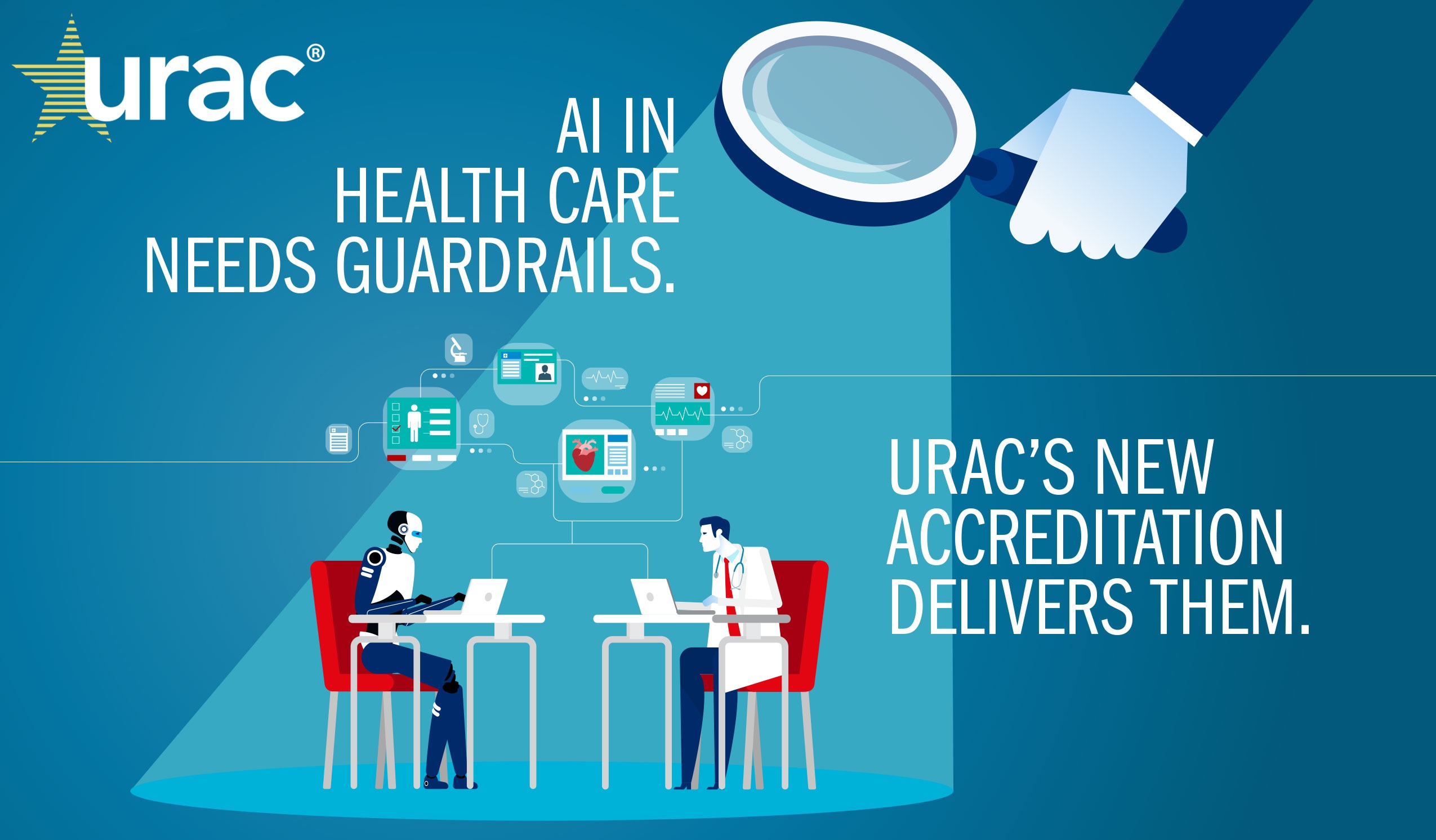

As artificial intelligence becomes more common in health care, policymakers are examining how it should be used in decisions that affect patients’ access to care.
The recently introduced Doctors Not AI Act of 2026 (H.R. 10210)(opens in new tab) would require adverse benefit determinations involving clinical judgment to be made by qualified licensed health care professionals exercising independent clinical judgment. The legislation would prohibit AI systems from issuing or dictating those determinations and would require disclosure when AI is used in the review process.
URAC’s Health Utilization Management Accreditation(opens in new tab) addresses many of the same concerns the bill raises about the use of artificial intelligence in utilization management. For example, an AI or machine learning tool cannot make a final decision to deny care on its own. If an initial review does not support authorization, a qualified clinical peer must review the case using current, evidence-based criteria.
URAC also looks at how organizations choose and use AI tools in the first place. That includes the quality of the clinical data behind them, how organizations monitor risk and performance and what safeguards they have in place to reduce the potential for bias.
As the role of AI in utilization management continues to evolve, independent standards can help organizations establish appropriate oversight while taking advantage of technology that can support efficient, high-quality care.
Learn more about URAC’s Health Utilization Management Accreditation here(opens in new tab)